- Sorry! We are currently closed!
 5 - Star Service
- Call our number today!
0410 790 630
5 - Star Service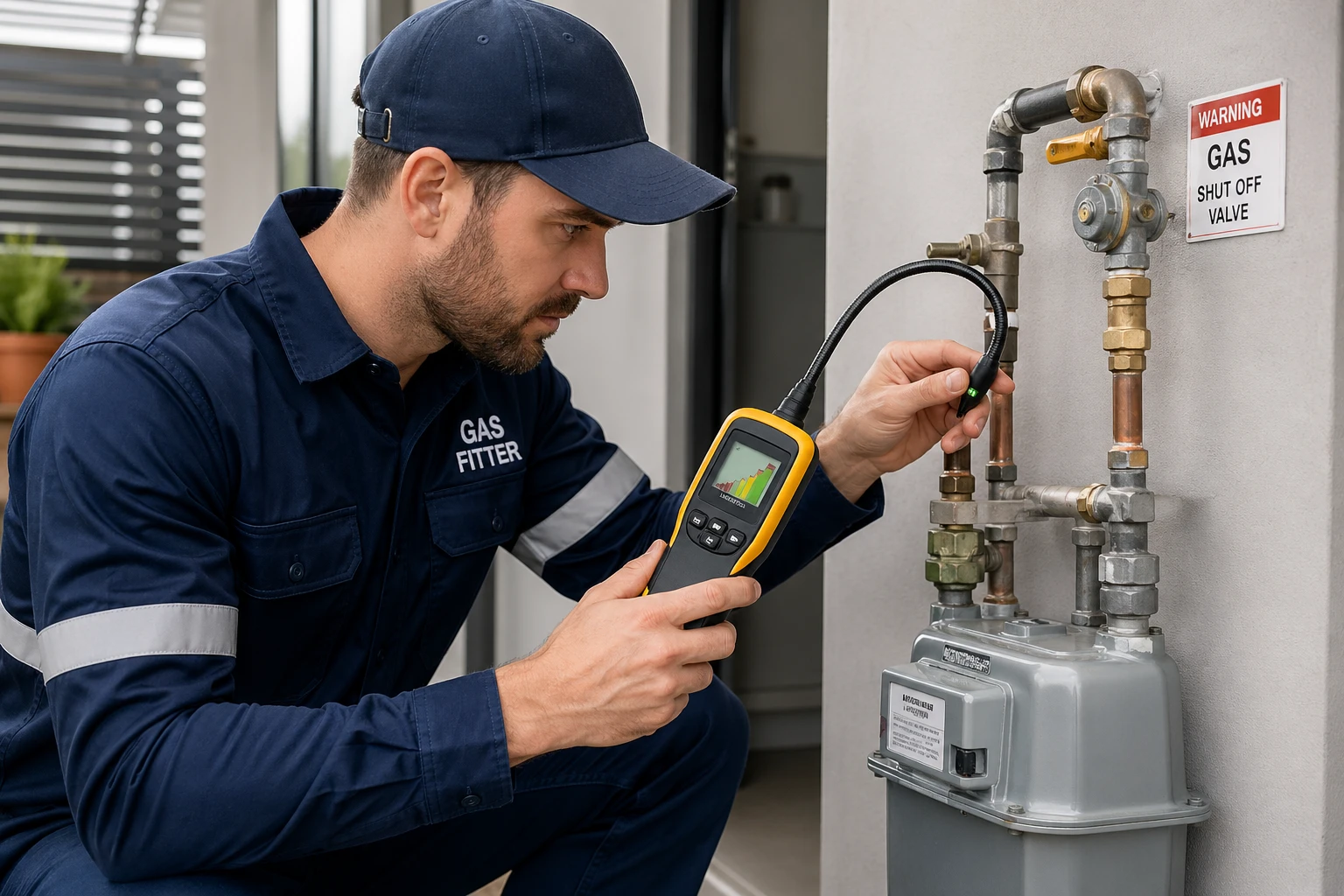
Discovering a gas leak in your home is a situation that requires immediate, decisive action. While many homeowners pride themselves on their DIY skills, gas is a unique beast. It is volatile, highly flammable, and when appliances aren’t burning correctly, capable of producing carbon monoxide, a colourless, odourless gas that can be deadly. If you are searching for how to fix a gas leak, the first thing you need to know is that “fixing” it yourself is almost always illegal and dangerous in Australia. However, there are critical steps you can take to manage the situation safely before a professional arrives.
This guide serves as a comprehensive gas leak troubleshooting resource. We will walk you through the immediate safety protocols, how to identify the source of a leak, and why professional gas fitting services are the only legal gas leak solution for Sydney residents.
If you smell that distinct “rotten egg” odour (mercaptan), you must stop thinking about how to repair the gas leak and start thinking about evacuation. Before you look for a wrench, follow these life-saving steps:
1. Eliminate All Ignition Sources: Do not light a match, use a lighter, or smoke. Most importantly, do not touch any electrical switches. Even the tiny spark created by turning off a light or using a doorbell can trigger an explosion if the gas concentration is high enough.
2. Open Doors and Windows: If it is safe to do so, provide maximum ventilation to allow the gas to dissipate.
3. Evacuate the Premises: Get all people and pets out of the building immediately.
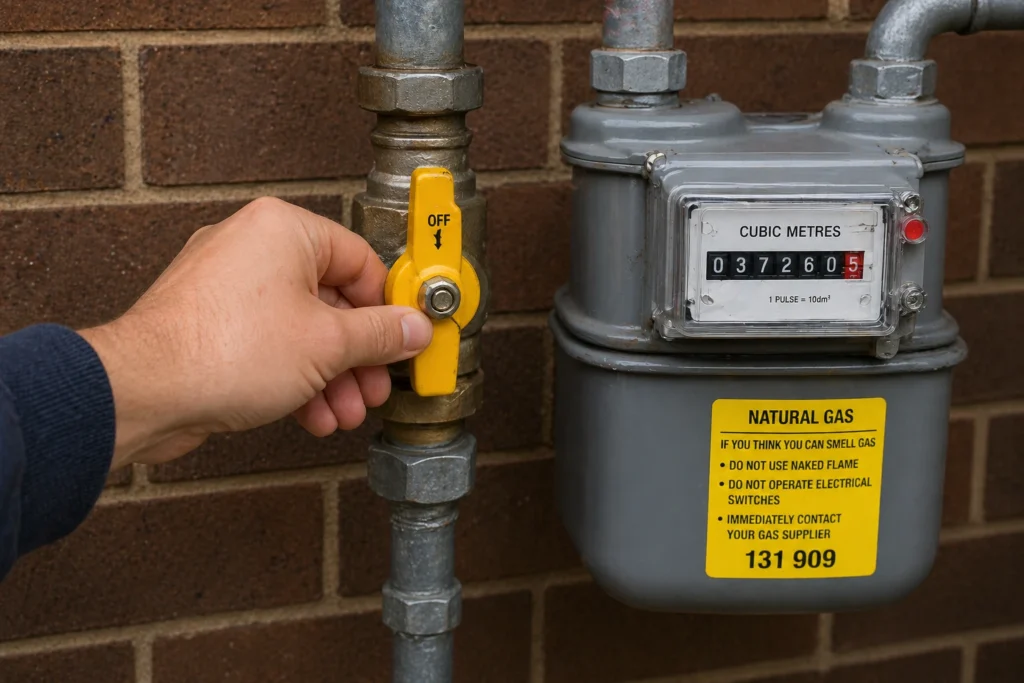
4. Turn Off the Gas at the Meter: Locate your gas meter (usually at the front of the property or in a utility box). Turn the valve to the “OFF” position (perpendicular to the pipe). This is the most important immediate step you can take to limit gas exposure while you wait for a licensed gas fitter.
Once you are safely outside and the main gas supply is off, you can begin the process of gas leak troubleshooting to provide information to your gas fitter.
Natural gas is odourless, but Australian suppliers add a chemical called mercaptan to give it a pungent smell. Use your nose to identify if the smell is stronger near a specific appliance, such as your cooktop, oven, or water heater. This applies whether your home runs on natural gas or LPG, as both use mercaptan as a safety odorant.
A significant leak often produces a faint hissing or whistling sound, particularly near a connection point or a regulator.
If you suspect a leak at a joint, you can apply a mixture of dish soap and water to the pipe. If bubbles begin to form and grow, you have found the leak. Note: This is a diagnostic tool, not a way to repair a gas leak. Never use a flame to find a leak.
You may find videos online showing people using “gas tape” or epoxy to fix a gas leak at home. In Australia, this is a recipe for disaster.
Under the NSW Gas Supply Act, all gas work must be performed by a dual-licensed plumber and gas fitter. Attempting a DIY repair can lead to significant fines and will void your home insurance. If a fire occurs and it is found that you performed unlicensed gas work, you will be personally liable for all damages.
Gas systems operate under specific pressures. A “patch” might hold for an hour, but it won’t withstand the pressure fluctuations of a working system. Licensed gas fitters use specialised copper crimping or flared compression fittings designed to withstand decades of pressure, not minutes.
When you call for emergency gas fitting services, the process follows a strict safety protocol to ensure a permanent gas leak solution.
The fitter will use a digital manometer to perform a “pressure drop test.” If the pressure falls while the appliances are off, it confirms there is a leak in the pipework.
The technician will isolate different sections of the gas line to narrow down exactly where the fault lies. They may use electronic combustible gas detectors that can find leaks that are too small for the soapy water test to detect.
Once found, the faulty section is replaced. This might involve cutting out a corroded piece of copper or replacing a perished flexible hose. After the repair, the entire system is retested to ensure it is 100% airtight.
The best approach to gas safety is the one you never have to act on. Proactive maintenance is the key to home safety.
• Check for Corrosion: If you have old galvanised pipes, they can rust from the inside out. Upgrading to copper is a vital long-term gas leak solution.
• Protect Your Pipes: Ensure that outdoor gas lines aren’t being used to hang garden tools or being bumped by lawnmowers.
• Regular Appliance Servicing: Have your gas heater and stove serviced every two years to ensure the internal seals haven’t become brittle.
• Install a CO Alarm: A carbon monoxide detector on each level of your home provides an early warning if incomplete combustion is producing dangerous CO levels, particularly important for homes with gas heaters or enclosed gas appliances.
No. Standard electrical or duct tape will not stop a gas leak. Even “gas-rated” thread tape is only for use during the assembly of a joint by a professional. Using tape as a patch is dangerous and illegal.
The most common sign is the “rotten egg” smell. Other signs include a hissing sound, dying plants near an outdoor gas line, or an unexplained spike in your gas bill.
If your gas heater is leaking, the only safe gas leak solution is to turn off the gas at the appliance’s isolation valve and call a licensed fitter. Old heaters often leak from the internal pilot assembly or cracked heat exchangers.
You should call a licensed plumber who also holds a gas fitting licence. They are the only professionals qualified to legally diagnose, repair, and certify gas work in NSW.
The cost depends on the location and severity of the leak. However, most minor repairs can be completed in under two hours. Always ask for a compliance certificate after the repair is finished.
Knowing how to fix a gas leak starts with understanding what not to do, and acting quickly on what you can. Your priority should always be the safety of your family and the ventilation of your home. By turning off the main gas supply and evacuating, you have done your part in managing the emergency. The final, permanent gas leak solution must always be left to the experts.
At Civic Plumbing, we provide 24/7 emergency gas fitting services across Sydney. Our licensed team has the tools and experience to perform rapid gas leak troubleshooting and provide a permanent, compliant repair that keeps your home safe. We provide upfront pricing and a safety guarantee on every job.
Don’t wait and see. If you smell gas or hear a hiss, every second counts.
Turn off your gas meter and call our emergency plumbers immediately on 0410 790 630 for fast, expert gas fitting assistance.



