- Sorry! We are currently closed!
 5 - Star Service
- Call our number today!
0410 790 630
5 - Star Service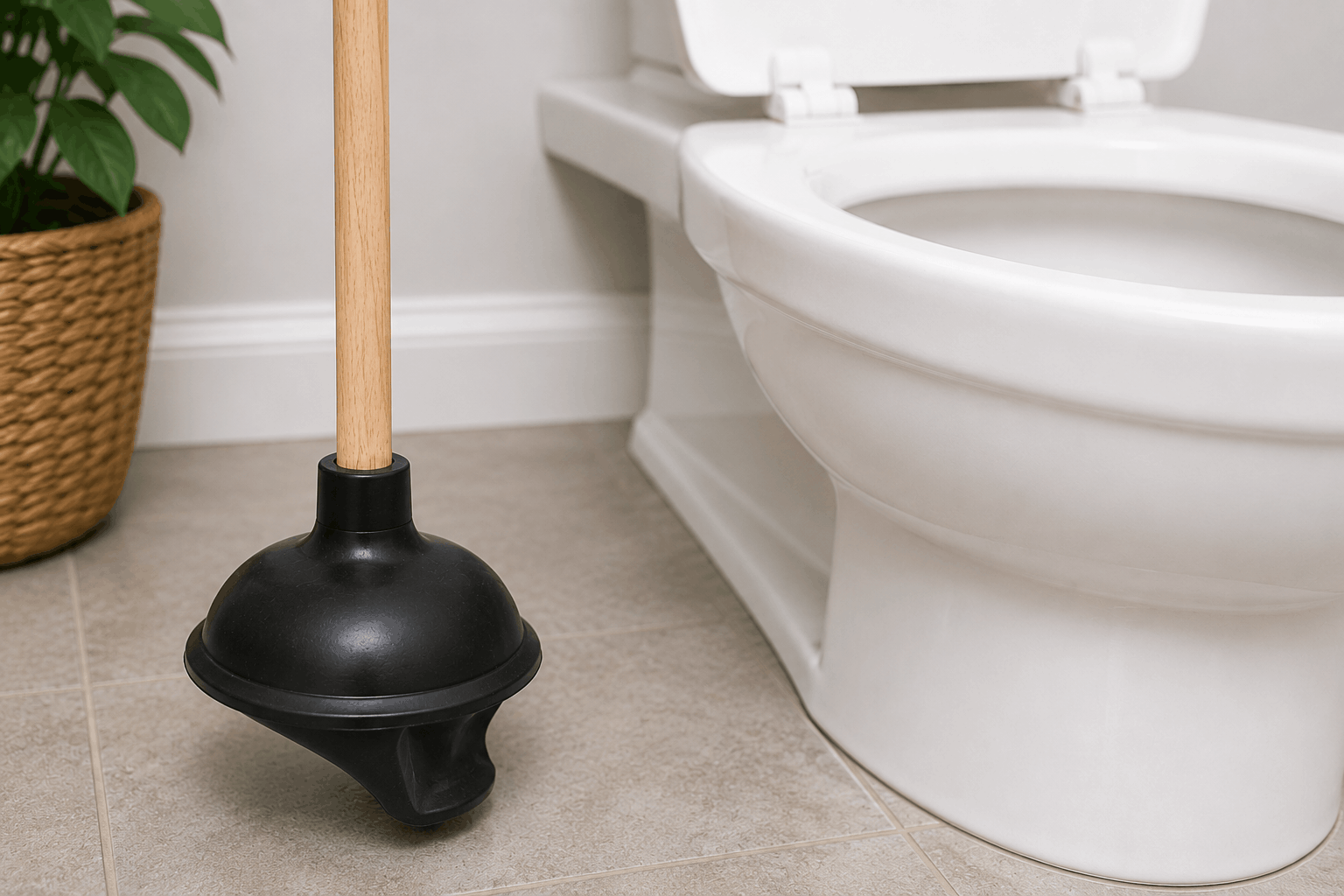
There are few household scenarios more stressful than watching the water level in your toilet bowl rise towards the rim after a flush. It is a moment that calls for immediate action, and for most Australians, the first tool we reach for is the humble plunger. However, there is a significant difference between giving the rubber a few panicked pumps and knowing how to unblock a toilet with a plunger like a seasoned professional.
We will explore the physics of a successful plunge, the specific technique that separates experts from amateurs, and how to identify when a stubborn clog requires professional intervention from a licensed Sydney plumber.
Before you can master the art of the plunge, you must understand what you are fighting. Most toilets in Sydney homes are designed to handle only two things: human waste and toilet paper. When other items enter the system, you can quickly find yourself reaching for the plunger to clear a stubborn drain blockage.
You cannot achieve a professional result with the wrong equipment. Most people imagine a simple red rubber cup on a stick, but that is actually a sink plunger. For a successful DIY toilet unblocking, you need a flange plunger (also known as a toilet plunger).
This plunger has an extra fold of rubber, a sleeve or “flange” that extends from the bottom of the cup. This flange plunger is designed to fit snugly into the toilet’s drain hole, creating the airtight seal necessary for an effective toilet plunger technique. Without this seal, you are simply splashing water around without creating the pressure needed to move the blockage.
Knowing how to use a toilet plunger correctly involves more than just brute force. It is about pressure and suction. Follow this professional-grade process to clear your next clog.
Unblocking a toilet can get messy. Lay down old towels or newspaper around the base of the toilet to catch any splashes. If the bowl is full to the brim, you may need to bail out some water into a bucket to prevent an overflow during the plunging process. Conversely, if the bowl is empty, add enough water to cover the head of the plunger.
Professional plumbers know that stiff rubber doesn’t seal well. Run the head of your plunger under hot water for a minute. This softens the rubber, allowing it to mould more effectively to the shape of your toilet drain, ensuring a perfect seal.
One of the most overlooked parts of how to use a toilet plunger is “burping” the air out. When you submerge the plunger, air gets trapped in the cup. If you plunge with air, you are compressing a gas, which is less effective than moving water. Tilt the plunger to let the air bubble out and fill the cup with water instead.
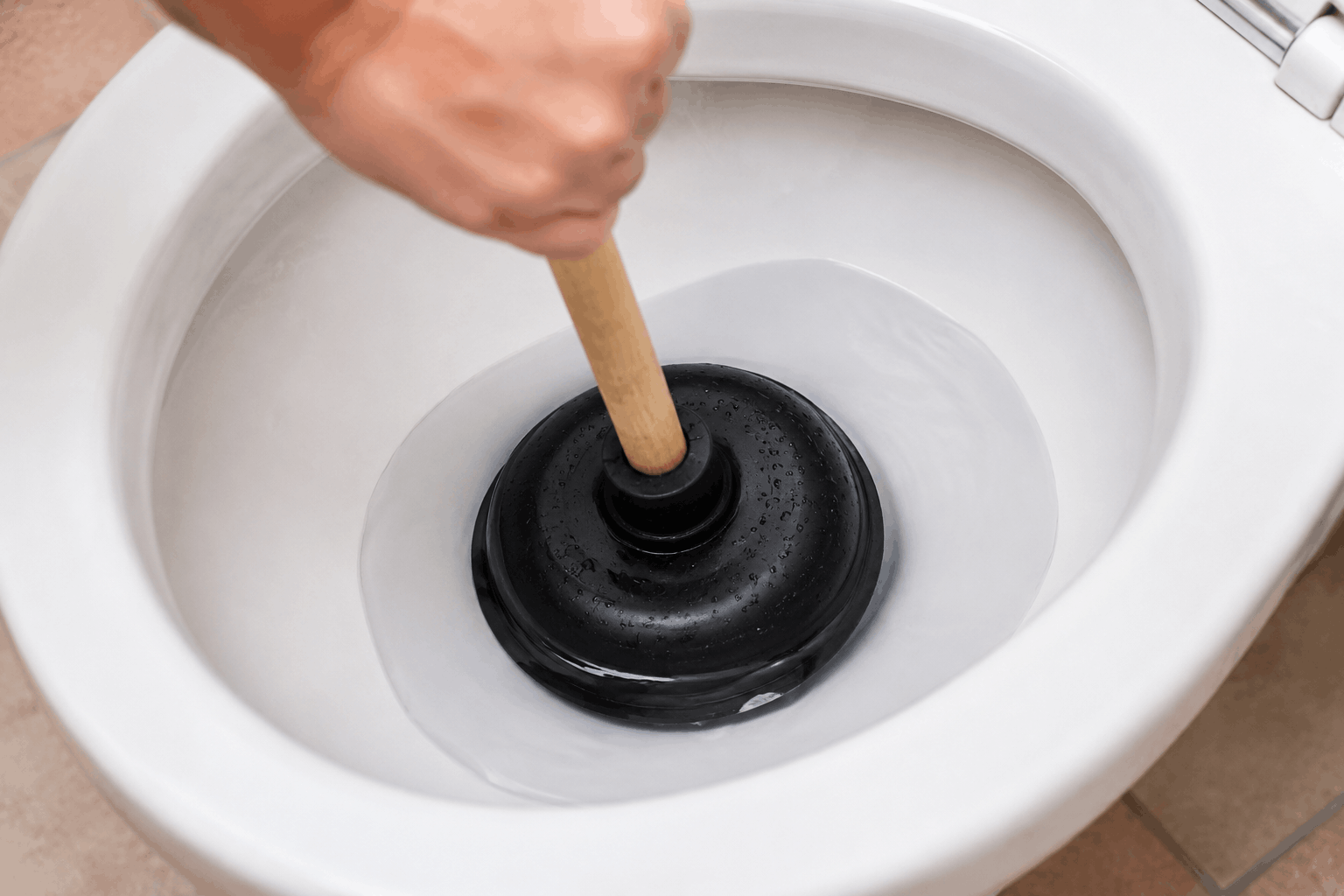
Insert the flange into the drain hole and press down firmly to create a seal. Now, start with a gentle push to get the rhythm. The secret to a professional toilet plunger technique is that the pull-back (suction) is just as important as the push (pressure). Vigorously plunge up and down for 15 to 20 seconds, maintaining the seal throughout.
Once you feel the resistance change or hear a “glug” sound, pull the plunger away. If the water level drops, you have successfully completed your DIY toilet unblocking. To be sure, drop a few squares of toilet paper in and perform a test flush.
If you have tried the professional toilet plunger technique several times and the water still isn’t moving, the blockage is likely further down the line or made of a material that cannot be dislodged by air and water pressure.
When a plunger fails, the next professional tool is the toilet auger. This is a flexible cable that you crank manually to hook or break up the blockage. It is a reliable method for shifting clogs that are wedged deep in the trap or just past the porcelain bend.
For clogs caused by organic waste, a chemical-free approach can sometimes do the trick. Pour a generous amount of dish soap into the bowl, followed by a bucket of hot (not boiling) water. Let it sit for 20 minutes. The soap acts as a lubricant, and the heat helps break down fats, often allowing the clog to slide through on its own.
It is tempting to pour a bottle of caustic chemicals down a blocked toilet, but for DIY toilet unblocking, this is a mistake.
Sometimes, a blocked toilet is just a symptom of a much larger problem. If you experience any of the following, the issue is likely beyond what a plunger can resolve:
In these cases, a CCTV drain inspection is required to locate the source of the issue. Often, tree roots are the culprit, requiring a permanent solution like pipe relining services.
The best DIY toilet unblocking is the one you never have to do. Follow these drain pipe cleaning tips to keep your porcelain throne in top shape:
The most effective toilet plunger technique is to ensure the plunger cup is filled with water, not air. Create a tight seal over the drain hole and use a vigorous up-and-down motion. Remember, the “pull” is just as important as the “push,” as the suction helps dislodge the blockage.
While you can try, a flat sink plunger rarely works. For a successful DIY toilet unblocking, you need a “flange” or “bellows” plunger. These have an extended rubber flap that fits into the toilet’s throat, creating the airtight seal necessary to clear the clog.
If a plunger fails, the blockage is likely a “hard” object (like a toy or wet wipes) or located further down the sewer line. If you’ve tried to fix a blocked toilet for 15 minutes with no luck, you may need a toilet auger or a professional CCTV drain inspection.
No. Never use boiling water in a toilet. The extreme heat can crack the porcelain bowl or melt the wax seal at the base, leading to a costly toilet pipe leak repair. Use warm, soapy water instead to help lubricate the blockage.
If water is backing up into your shower or floor wastes when you flush, you have a main line blockage. This cannot be solved with a toilet plunger technique and requires an emergency plumber to perform hydro-jetting or potentially pipe relining services.
Mastering how to use a toilet plunger is a rite of passage for every homeowner. By using the correct toilet plunger technique, focusing on the seal and the suction, you can handle 90% of common toilet clogs without calling for backup. However, remember that the plunger has its limits. If the water remains stagnant after several attempts, it is a sign of a deeper structural issue or a hard blockage that requires professional tools.
At Civic Plumbing, we specialise in all forms of toilet repairs and drainage solutions. From a quick call-out for a stubborn clog to advanced pipe relining for root-damaged sewers, our Sydney-based team is equipped with the latest technology, including hydro-jetting and CCTV cameras, to get your home back to normal. We provide upfront pricing, 24/7 emergency support, and the professional expertise that Redfern and the surrounding suburbs have trusted for over 20 years.
Don’t let a stubborn clog ruin your day or damage your home. If your professional plunging hasn’t done the trick, it’s time to call in the experts.
Struggling with a persistent blockage? Call us today on 0410 790 630 for fast, reliable service you can trust.



