- Sorry! We are currently closed!
 5 - Star Service
- Call our number today!
0410 790 630
5 - Star Service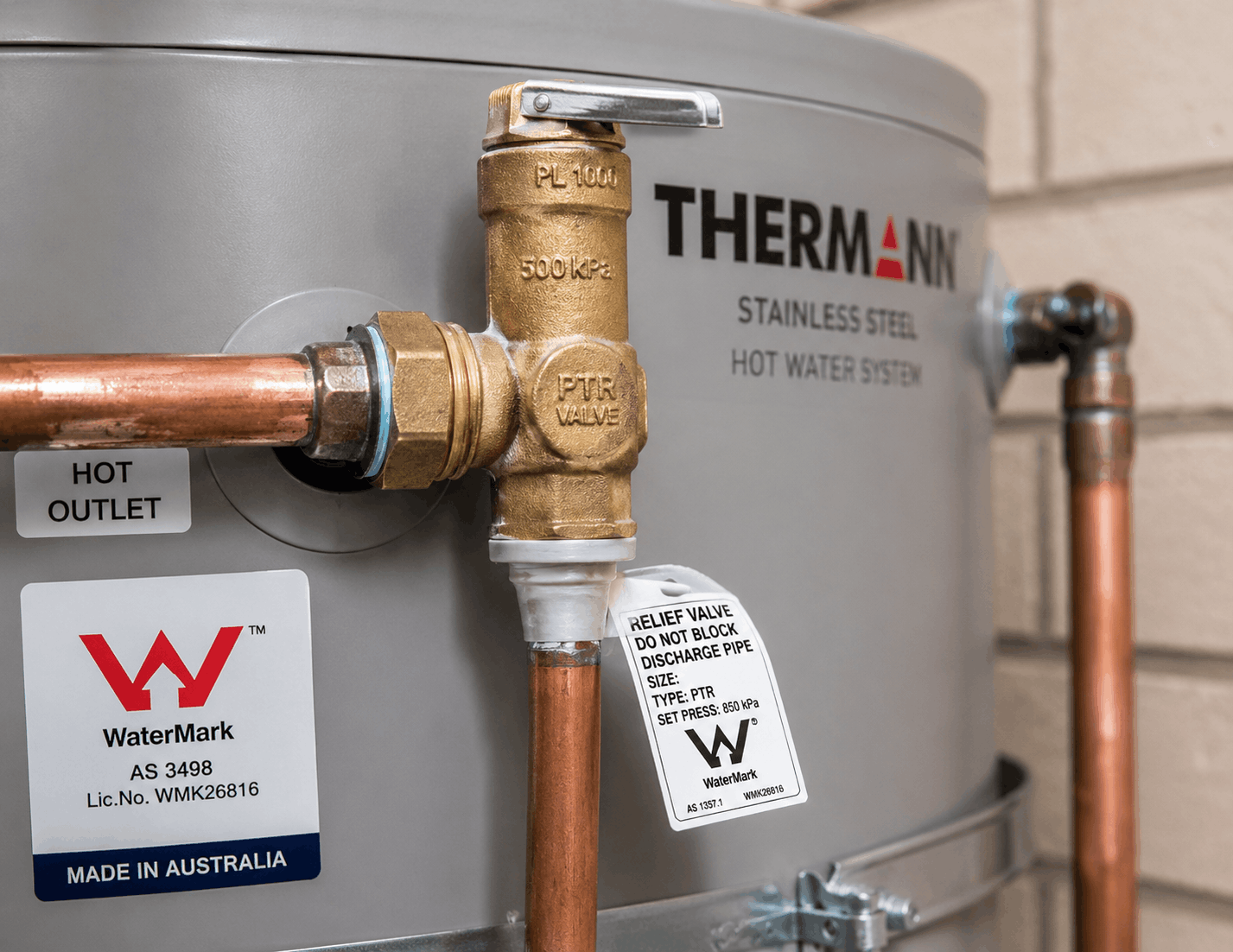
Imagine a sealed metal container filled with water, subjected to intense, continuous heat. As the temperature rises, the water expands, and steam begins to form, creating an immense internal force. Without an escape route, that container will eventually rupture under the pressure.
This scenario isn’t a hypothetical laboratory experiment. It is exactly what would happen to the water tank in your backyard or garage if it weren’t for a single, unassuming safety device: the pressure relief valve.
Often abbreviated as a PTR valve (Pressure Temperature Relief valve), this fitting is the most critical safety mechanism on any storage hot water unit in Australia. Whether you run a gas storage system, an electric cylinder, or a solar booster, your system relies on this valve to manage thermal expansion safely.
To understand why pressure relief valves are an absolute necessity under Australian plumbing standards, we must look at the physical properties of water when it changes temperature.
When water is heated from an ambient room temperature to a standard household operating temperature of 60 degrees or higher, its volume increases by approximately 2% to 3%. In a closed system, like a sealed mains-pressure storage tank, that extra volume has nowhere to go. Because water cannot be compressed, this expansion exerts a massive outward force against the steel walls of the cylinder.
If a hot water system’s thermostat fails, the heating element or gas burner will continue to run nonstop. If the water inside reaches the boiling point of 100 degrees, it transforms into steam. Steam expands to more than 1,600 times the volume of liquid water.
Without a fully operational pressure relief valve, the internal pressure can exceed the structural limits of the tank within minutes, causing serious structural damage to your home and posing a significant safety risk to anyone nearby.
A temperature and pressure relief valve is a dual-action safety device mounted directly into the upper portion of a hot water storage tank. It is specifically engineered to respond to two distinct emergency thresholds:
When either of these thresholds is breached, the hot water valve opens, discharging a controlled stream of hot water and steam through a dedicated copper drain line safely away from the building. This immediately lowers the internal energy of the tank, normalising the pressure and preventing a structural rupture.
Like any mechanical item constantly exposed to extreme heat, high pressure, and minerals dissolved in our water supply, pressure relief valves have a limited lifespan. On average, Australian plumbing regulations and manufacturers recommend a full pressure valve replacement every 4 to 5 years.
If you notice any of the following warning signs, your safety valve may be compromised, requiring an immediate call-out for relief valve repair or replacement:
It is perfectly normal for a PTR valve to drip slightly during a heating cycle. This minor release simply indicates that the valve is doing its job, venting small amounts of expansion water to keep the internal pressure stable.
However, if you notice a continuous, heavy stream of water running down the drain line 24 hours a day, the internal spring or rubber seal has failed. This constant leak wastes thousands of litres of water per year, spikes your utility bills, and indicates that the valve may no longer seal under pressure.
Conversely, a valve that never releases water can be even more dangerous. If your system is actively heating water but the relief line has remained completely dry for several months, the valve’s internal mechanism may be seized due to mineral scale or corrosion. A seized valve cannot open during an over-pressure event, leaving your home completely unprotected.
Listen to your hot water tank while it is operating. If you hear a sharp sizzling, whistling, or boiling sound coming from the top of the cylinder, it signals that steam is trying to escape through a partially blocked or restricted valve. This is a clear indicator that the internal water temperature has climbed past safe thresholds, and you require an emergency inspection.
Because these valves are constructed from brass and copper, they can suffer from oxidation over time. If you inspect the valve and see a heavy accumulation of white powdery mineral scale, green copper corrosion, or rust bleeding around the threaded connection, the structural integrity of the valve is failing. A corroded valve can crack under pressure, causing a major external leak.
If the water coming out of your bathroom taps is suddenly dangerously hot or fluctuates wildly, your system’s thermostat is likely failing. When the thermostat fails, it puts immense pressure on the temperature relief valve to keep venting steam. If this occurs, both the heater element and the safety valve must be serviced together to ensure safe operations.
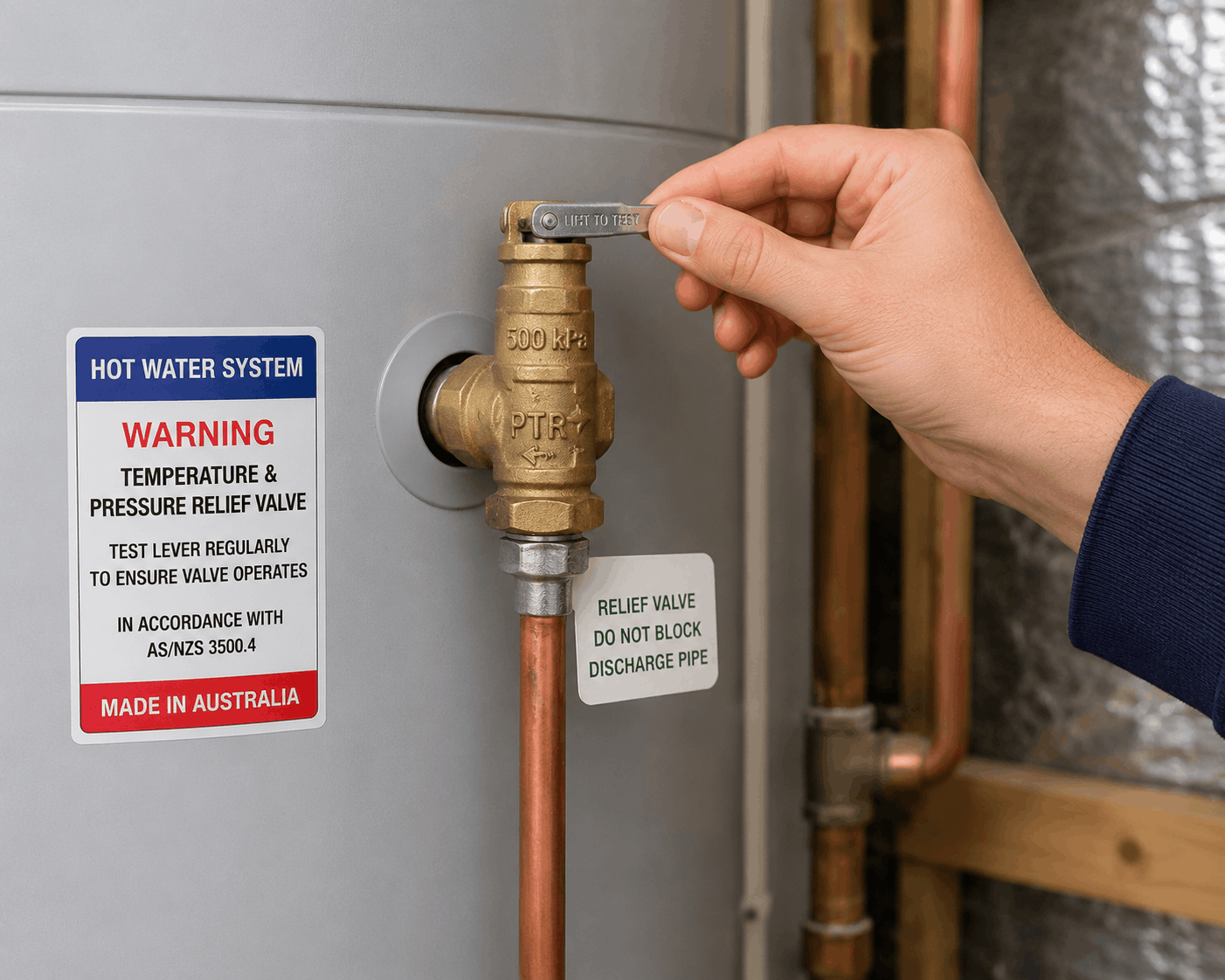
To ensure that your pressure relief valves remain operational between professional service intervals, Australian standards recommend that homeowners perform a basic check every six months. This is known as “easing the valve.”
Safety Note: If the lever feels completely stuck and will not budge, or if you release the lever and the water continues to pour out rapidly without stopping, the valve is faulty. Do not attempt to force or repair the valve yourself. Contact a licensed plumber for an immediate inspection and pressure valve replacement.
It can be tempting to browse a local hardware store, purchase a replacement valve, and attempt a DIY fix. However, in Australia, working on hot water systems and pressurised gas or electrical lines is regulated work that must be carried out by a licensed tradesperson under state and territory plumbing codes.
Every hot water cylinder has a specific maximum operating pressure, clearly stamped on its compliance plate. Pressure relief valves come in a wide range of pressure ratings (e.g., 700 kPa, 850 kPa, 1,000 kPa).
If you install a valve with a pressure rating that is too high, the tank will split or explode before the valve ever opens. If you install a valve with a rating that is too low, it will constantly dump hot water down the drain, driving up your energy bills. A licensed plumbing expert ensures the valve is perfectly matched to your unit’s technical specifications.
Australian plumbing codes (AS/NZS 3500.4) dictate exactly how the discharge line from a temperature relief valve must be run. The pipe must be constructed from copper (never plastic, which will melt under steam), must run with a continuous downward fall, cannot feature any shut-off valves, and must terminate at a safe, visible location above an open gully or drain. Professional gas fitting services and plumbing providers guarantee that your installation meets these strict legal requirements, keeping your property insurance valid.
In Australia, most manufacturers and state regulators recommend a full pressure valve replacement every 4 to 5 years. The internal springs and rubber seals naturally degrade over time due to high heat and mineral scaling, which can cause the valve to stick or leak continuously.
Yes, a minor drip or trickle of water from the discharge line is perfectly normal while the hot water system is actively heating. This release allows the tank to handle natural thermal expansion. However, if the line is pouring water constantly when the system is idle, you need a relief valve repair or replacement.
If a temperature relief valve ceases to operate and the hot water system’s thermostat malfunctions, pressure will build inside the tank without an escape route. This will eventually cause the steel cylinder to fail under pressure, resulting in serious flooding and structural damage to your home.
No. Pressure relief valves are factory-sealed and calibrated to a specific pressure and temperature setting. They can never be adjusted manually. If your valve is releasing too much water due to high mains pressure, a plumber must install a separate pressure-limiting valve at the main water entry point.
Commercial hot water systems operate at much higher volumes and pressures than residential units, often requiring specialised industrial valves and heavy-duty compliance logging. Ensure your provider has extensive experience in both residential and commercial gas line repair and plumbing maintenance before booking.
Mastering how to use a toilet plunger is a rite of passage for every homeowner. By using the correct toilet plunger technique, focusing on the seal and the suction, you can handle 90% of common toilet clogs without calling for backup. However, remember that the plunger has its limits. If the water remains stagnant after several attempts, it is a sign of a deeper structural issue or a hard blockage that requires professional tools.
At Civic Plumbing, we specialise in all forms of toilet repairs and drainage solutions. From a quick call-out for a stubborn clog to advanced pipe relining for root-damaged sewers, our Sydney-based team is equipped with the latest technology, including hydro-jetting and CCTV cameras, to get your home back to normal. We provide upfront pricing, 24/7 emergency support, and the professional expertise that Redfern and the surrounding suburbs have trusted for over 20 years.
Don’t let a stubborn clog ruin your day or damage your home. If your professional plunging hasn’t done the trick, it’s time to call in the experts.
Struggling with a persistent blockage? Call us today on 0410 790 630 for fast, reliable service you can trust.



