- We're are currently open!
 5 - Star Service
- Call our number today!
0410 790 630
5 - Star Service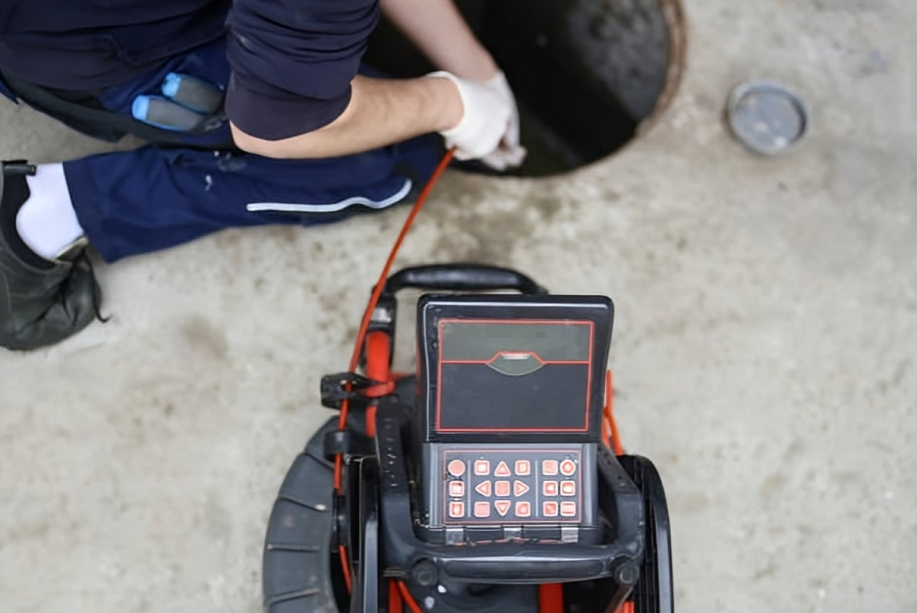
Blocked drains in Sydney are a common problem for homes, businesses and strata properties. While a simple blockage close to a sink or shower may sometimes be easy to clear, recurring or more serious blockages often need proper investigation.
Professional plumbers do not simply push through whatever is blocking the pipe. We first work out where the blockage is, what caused it and whether there is an underlying problem with the drainage system. From there, we can choose the right equipment to clear the obstruction without unnecessarily damaging the pipe.
The exact process depends on the type and location of the blockage, but a professional plumber will generally:
That diagnosis is important. Clearing the blockage may restore flow, but if the underlying cause remains, the same drain can block again.
Not every blocked drain has the same cause, so the equipment used to clear it can vary considerably.
Root intrusion is particularly common in older drainage systems, including clay or earthenware pipes. Roots can enter through cracks or loose joints and continue growing once they reach moisture inside the pipe.
A CCTV drain inspection can help determine how much root intrusion is present and whether the pipe itself has been damaged. Depending on the condition of the drain, roots may be removed using mechanical cutting equipment or high-pressure water jetting.
However, removing the roots does not repair the opening that allowed them into the pipe.
If roots continue returning because the pipe is cracked or damaged, pipe relining may provide a longer-term solution by sealing the affected section from inside the existing pipe.
Grease blockages generally build gradually as fats, oils and food residue collect along the inside of the pipe.
High-pressure water jetting is often used for this type of blockage because it can remove buildup from the internal pipe walls rather than simply creating a small opening through the obstruction.
In commercial kitchens where grease blockages keep returning, the plumber may also investigate whether a grease trap or another part of the drainage system is contributing to the problem.
Hair and soap residue commonly collect around bathroom drains, showers and basins.
For straightforward blockages close to a fixture, a drain snake, cable machine or electric eel may be enough to break up and remove the obstruction.
If the same drain repeatedly blocks, further investigation may be worthwhile to check whether grease, scale or another issue deeper in the pipe is contributing to the problem.
Wipes, sanitary products, food waste and other materials that should not have entered the drainage system can become lodged at bends, junctions or damaged sections of pipe.
Where the location or type of obstruction is not clear, a plumber may use a CCTV camera before attempting to remove it. Once located, cable equipment, retrieval tools or water jetting may be used depending on what is inside the pipe.
If blockages continue occurring in exactly the same location, further investigation may reveal an issue with the pipe alignment, joint or condition.
Sometimes the blockage is not the main problem.
A cracked, displaced or collapsed pipe can restrict flow and continually collect debris. In these cases, repeatedly clearing the drain may only provide temporary relief.
A CCTV inspection can help identify structural problems and determine whether the damaged section may be suitable for pipe relining or whether excavation and pipe replacement are required.
Professional plumbers have several ways to investigate and clear blocked drains. The right equipment depends on where the blockage is and what is causing it.
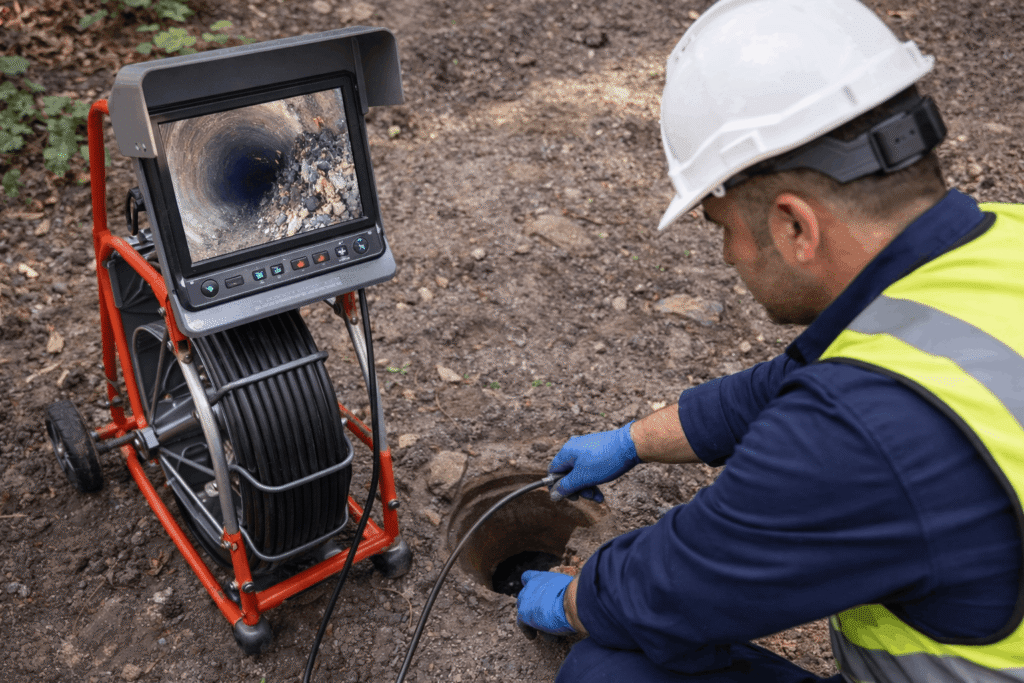
A waterproof CCTV camera can be fed through the drainage system to inspect the inside of the pipe.
It allows plumbers to identify problems such as:
Many professional drain cameras also have self-levelling heads, helping keep the footage upright as the camera travels around bends.
Recorded footage can also be useful when explaining the condition of the drain to property owners, strata managers or other parties involved in organising repairs.
CCTV equipment can often be used together with pipe-locating technology.
A transmitter, or sonde, within the camera head can be detected from above ground using specialised locating equipment. This helps plumbers determine where the inspected section of pipe is located before repair work begins.
This can be particularly useful when pipes run underneath concrete, paving, landscaping or other finished surfaces.
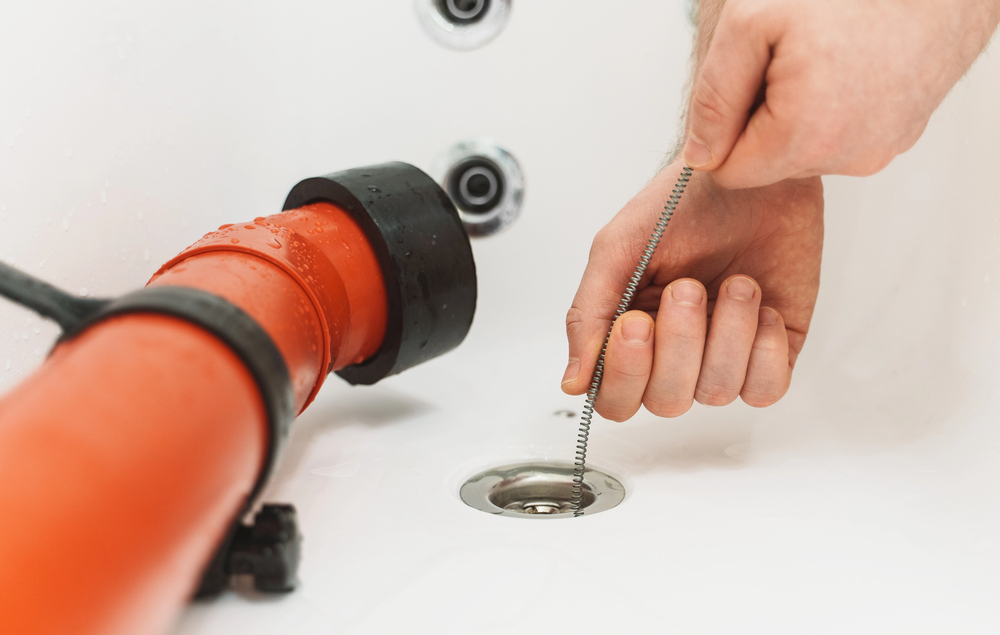
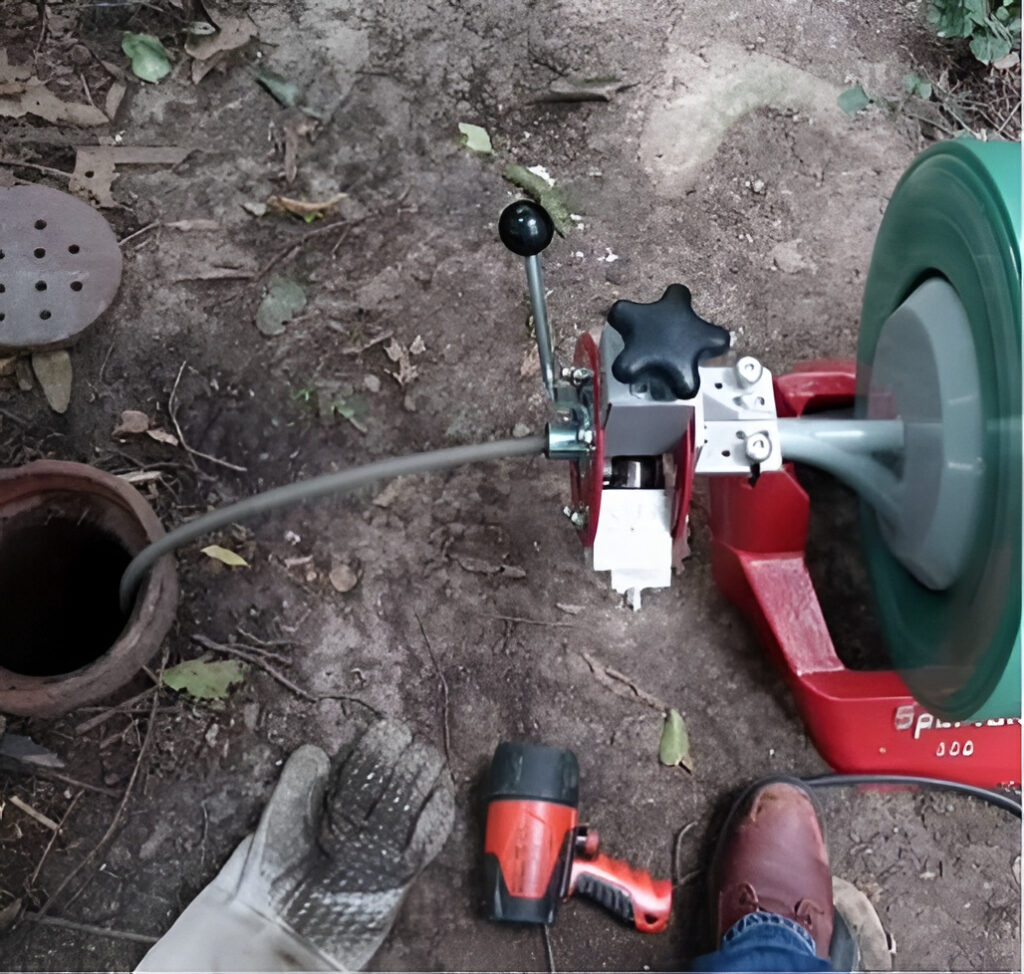
Drain snakes and electric eels use flexible cables to move through drainage pipes and break apart or retrieve obstructions.
Different attachments can be fitted depending on the type of blockage.
These tools can be effective for certain hair, soap, debris and other straightforward blockages, particularly when the obstruction is relatively close to the fixture.
High-pressure water jetting uses specialised equipment to send powerful streams of water through the drainage system.
It can be particularly effective for:
Unlike methods that simply create an opening through the blockage, water jetting can clean buildup from a larger portion of the internal pipe surface and help restore proper flow through the line.
The pressure and nozzle used should be selected to suit the condition of the pipe and the type of blockage being cleared.
Pipe relining is not technically a drain-clearing tool, but it can become part of the solution when a blockage reveals damage to the pipe itself.
A resin-coated liner is installed inside the existing pipe and cured in place, creating a new internal lining.
Where suitable, relining can repair damaged sections without excavating an entire driveway, garden, floor or other finished area above the pipe.
If you live in a unit anywhere from Redfern to the Sydney CBD, blocked drains can be more complicated than they are in a standalone home.
One drainage line may serve several apartments, and much of the pipework can run behind walls, beneath floors or through common areas.
In a NSW strata property, responsibility for drainage repairs depends on where the affected pipe is located and how the boundaries between the lot and common property are defined.
Pipework inside boundary walls, floors and other areas of common property will generally fall under the owners corporation’s maintenance responsibility, while some plumbing fixtures or pipework within an individual lot may be the owner’s responsibility.
Because strata plans and by-laws can differ, it is worth checking with the strata manager or owners corporation if responsibility is unclear.
If you are unsure, check your strata plan and by-laws or refer to the NSW Government’s guidance on strata repairs and maintenance.
A blockage in a shared drainage stack can affect several apartments rather than just one.
That is why plumbers working in strata buildings first need to determine whether the issue is isolated to a particular fixture or unit, or whether it involves shared drainage infrastructure.
Access can also be more complicated, particularly where pipework runs through walls, service ducts or common areas.
For larger jobs, the plumber may also need to coordinate access with strata or building management so work can be completed with minimal disruption to residents.
In a multi-storey building, much of the drainage system is concealed.
A CCTV inspection can help narrow down the location and cause of a blockage without unnecessarily opening walls or floors. It can also provide footage of defects that may require further repair or strata approval.
Some blocked drains can be cleared yourself, particularly when the problem is minor and limited to one fixture.
However, call a plumber if:
If it is only one slow sink and there are no other drainage symptoms, simple steps such as cleaning the trap or using a plunger may be appropriate. Persistent or widespread symptoms usually indicate that the problem is further inside the drainage system.
For plumbing and drainage work that requires professional attention, use an appropriately licensed tradesperson. You can also refer to the NSW Government plumbing and drainage licensing requirements.
Some DIY attempts can make a blocked drain harder or less safe to repair.
If you want to try safe DIY options for a minor blockage, see our guide on how to clear a blocked drain.
There is not one drain-clearing method that works for every blockage. The important part is identifying what is actually causing the problem before deciding how to clear it.
A drain blocked by hair may only need a cable machine. A grease-filled pipe may respond better to high-pressure water jetting. Tree roots may need to be cut or jetted before the damaged pipe is repaired. A collapsed drain may require structural repair rather than another attempt at clearing it.
The goal should be to restore flow and, where possible, deal with the reason the blockage occurred so it is less likely to return.
Plumbers may use drain snakes, electric eels, CCTV cameras, pipe locators and high-pressure water jetting equipment depending on the type and location of the blockage.
Plumbers can assess which fixtures are affected and may insert a CCTV drain camera into the pipe. Pipe-locating equipment can also help determine where the inspected section sits underground or beneath finished surfaces.
Yes. Depending on the extent of the root intrusion and the condition of the pipe, plumbers may use mechanical cutting equipment or high-pressure water jetting to remove roots. If roots entered through a damaged pipe, further repairs may be recommended.
Recurring blockages can indicate an underlying issue such as tree root intrusion, grease buildup, damaged joints, poor pipe condition or a structural fault. A CCTV inspection can help identify why the problem keeps returning.
If your drains are backing up, running slowly or repeatedly becoming blocked, Civic Plumbing can investigate the cause and recommend the most appropriate way to clear the line.
We work with blocked drains across Sydney homes, businesses and strata properties, using professional drain-clearing and inspection equipment to find out what is happening inside the pipe rather than simply treating the surface symptom.
Whether you are dealing with a single blocked drain or a larger drainage problem affecting several fixtures, get in touch with Civic Plumbing to arrange an inspection and get the problem properly assessed.



