- Sorry! We are currently closed!
 5 - Star Service
- Call our number today!
0410 790 630
 5 - Star Service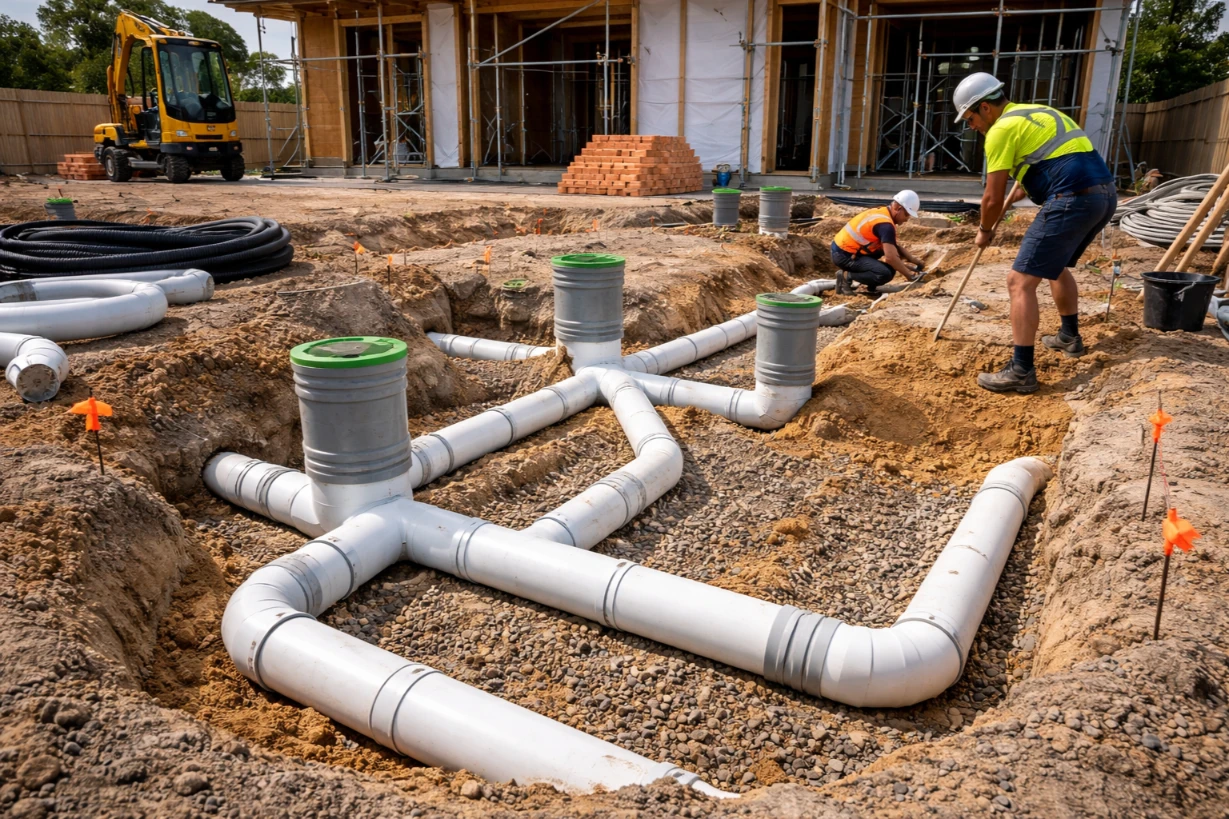
Embarking on a construction project in Sydney is an ambitious journey. Whether you are a homeowner building your dream residence in the Inner West or a developer managing a medium-density project in the Eastern Suburbs, getting your new build plumbing right from the start is one of the most important decisions you will make for your property.
Unlike a simple toilet repair or a quick fix for blocked drains in an existing property, plumbing for a new construction requires a ground-up approach. It involves close coordination with architects, builders, and local councils to ensure every pipe, vent, and fixture meets Australian Standards (AS/NZS 3500).
When you are at the planning stage of a fresh construction, it is easy to focus on the aesthetics: the kitchen splashbacks, the freestanding baths, or the vanity units. However, the most expensive mistakes in construction are usually buried under concrete or behind finished walls.
High-quality new build plumbing ensures that your property is protected against future issues like a burst pipe or foundation-damaging leaks. A licensed plumber from Civic Plumbing knows that getting it right the first time is not just best practice. It is a structural necessity that can save thousands of dollars in rectification works down the track.
The first physical step in new build plumbing occurs before the floor of the house even exists. This is known as the “underground” or “pre-slab” phase.
During this stage, your plumber lays the main sewer lines and stormwater drainage according to the hydraulic plans. In Sydney, managing stormwater is particularly important given the region’s heavy seasonal rainfall. If the new plumbing design does not account for proper water runoff, you risk garden flooding or, worse, sub-floor dampness.
Once the concrete slab is poured, the location of your toilets, showers, and kitchen sinks is essentially “set in stone.” A mistake of just 100mm in the pipe placement can mean your toilet will not fit against the wall or your kitchen island will not align with the drainage. This is why hiring an experienced team for new build plumbing is far more critical than hiring a handyman for a simple fix.
Once the timber or steel frame of the building is up, the second stage begins. This is called the “rough-in.”
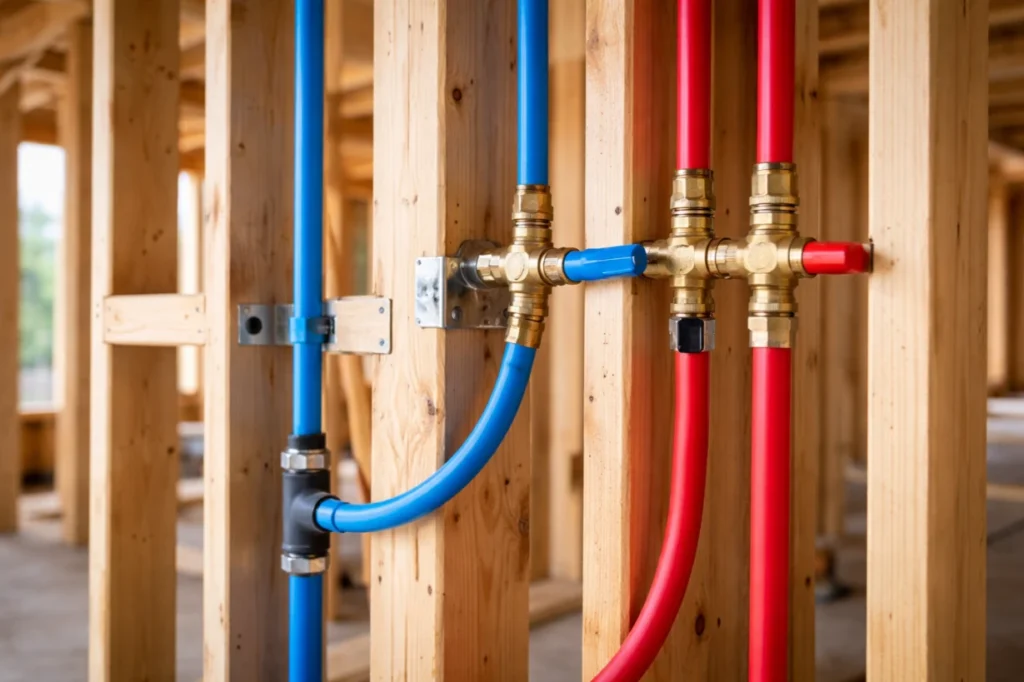
During the rough-in, the plumber installs all the internal pipework for hot and cold water. This is also when gas fittings are installed for cooktops, hot water systems, and outdoor BBQ points. In Australia, gas work must be performed by a licensed professional to ensure there are no leaks, an essential safety step to avoid future needs for carbon monoxide testing.
A plumbing system needs to “breathe.” Without proper venting, the water in your traps would be siphoned out, allowing sewer gases to enter your home. During the plumbing rough-in, vent pipes are run through the wall cavities and out through the roof to ensure the system maintains correct atmospheric pressure.
A core component of new build plumbing is the installation of the water heater. Under current Australian regulations, new homes must meet specific energy efficiency targets (such as the BASIX requirements in NSW).
You generally have three choices for your new build:
1. Continuous Flow (Instantaneous): Popular in Sydney due to their compact size and the fact that they only heat water when you turn on the tap.
2. Solar Hot Water: An environmentally friendly option that uses Australia’s abundant sunshine to reduce energy bills.
3. Electric Heat Pumps: Highly efficient systems that extract heat from the air to warm your water.
The most exciting part of plumbing for new homes is the fit-out. This is when the house finally starts to look like a home.
• Fixture Installation: This involves installing the toilets, basins, baths, and tapware.
• Appliance Connection: Connecting the dishwasher, fridge water lines, and washing machines.
• Testing: This is the most critical part of the fit-out. Every tap is turned on, every toilet is flushed, and the entire system is pressure-tested to ensure there are no leaks before the owners move in.
Even with modern materials, new construction plumbing often requires advanced solutions. For example, in high-density areas of Sydney where we are building close to existing infrastructure, we might employ leak detection technology during the final stages to ensure that the new connections to the main city lines are 100% secure.
Beyond that, while you would not expect to need pipe relining or drainage clearing in a brand-new home, the construction process itself can be messy. It is not uncommon for construction debris to find its way into pipes. A professional plumbing service includes a final CCTV drain inspection to ensure the homeowner does not inherit a blockage on day one.
While both involve plumbing installation, construction plumbing for a new build differs significantly from renovation work. Starting from scratch means your hydraulic engineer and plumber can design the entire drainage and water supply layout around the building plans, with no compromises. Renovation plumbing, by contrast, must work around existing pipe routes, wall cavities, and fixtures, often requiring creative problem-solving and partial upgrades. New builds also follow a clearer compliance pathway, with inspections built into each phase of the project rather than retrofitted at the end.
The cost of plumbing a new home depends on several factors, including the size of the property, the number of bathrooms and wet areas, your choice of materials (such as copper versus PEX piping), the complexity of the hot water and gas systems, and labour. While it can be tempting to cut costs during the build phase, investing in quality residential plumbing from the outset significantly reduces the risk of costly repairs and ongoing maintenance.
It involves installing an entire plumbing system from scratch during construction, allowing full design control, unlike repairs or upgrades in existing properties.
Good planning ensures correct pipe placement, efficient water flow, and compliance with Australian Standards, helping avoid costly mistakes that are difficult to fix once construction is underway.
The process covers underground drainage, rough-in of water and gas lines, hot water system selection, and final fixture installation with full pressure testing.
Options include continuous flow, solar, and heat pump systems. The best choice depends on your budget, energy efficiency goals, and household water usage.
Costs vary based on property size, number of fixtures, materials, and system complexity. Investing in quality installation reduces long-term repair and maintenance expenses.
Investing in high-quality new build plumbing is the best insurance policy you can buy for your new home. By focusing on precision during the rough-in and quality during the fit-out, you ensure a home that is efficient, safe, and free from the headaches of burst pipes for years to come.
From the first shovel in the ground to the final turn of the tap, Civic Plumbing is Sydney’s trusted partner for residential and commercial construction. We combine 20 years of experience with the latest technology in leak detection and gas fittings to deliver a result that exceeds Australian Standards.
Starting a new project? Get the plumbing right from the start. Call us today on 0410 790 630.
