- We're are currently open!
 5 - Star Service
- Call our number today!
0410 790 630
5 - Star Service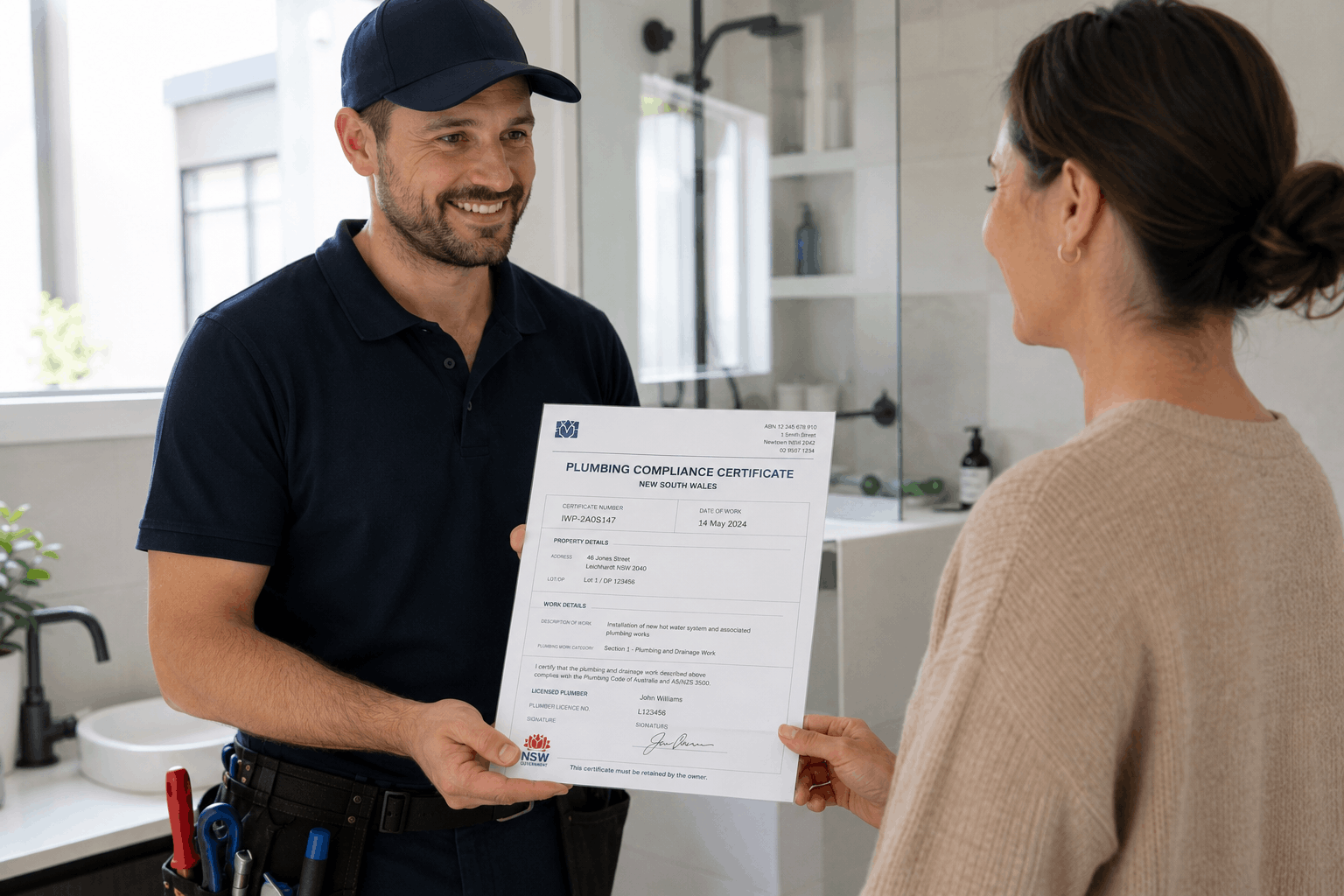
When you engage a professional for a major renovation or a critical repair, you aren’t just paying for parts and labour. You are paying for the peace of mind that the work is safe, legal, and built to last. In the Australian plumbing industry, the ultimate gold standard of this assurance is the plumbing compliance certificate.
Whether you are a homeowner in Sydney, a landlord, or a property developer, understanding the role of this document is vital. It is more than just a piece of paperwork; it is a legal safeguard that protects your property value, your insurance eligibility, and most importantly, the safety of everyone under your roof. In this guide, we will explore what a plumbing compliance certificate is, when you need one, and why hiring a licensed plumber who can issue a compliance certificate is a non-negotiable step for any property owner.
A plumbing compliance certificate is an official document issued by a licensed plumber upon the completion of regulated plumbing and drainage work. This certificate serves as a formal declaration that the work complies with the Plumbing Code of Australia (PCA), relevant Australian Standards (such as AS/NZS 3500), and state-specific plumbing regulations in Australia.
By issuing this certificate, the plumber takes legal responsibility for the work performed. It confirms that the materials used are of the required standard and that the installation has been tested and found to be safe and functional.
In Australia, only a licensed plumber is authorised to issue a compliance certificate. While a “registered” plumber can perform many tasks under supervision, they do not have the legal authority to certify work. This is why it is critical to verify that your contractor holds a valid trade licence and is authorised to issue a compliance certificate before any work begins.
Not every quick fix requires a certificate. For instance, minor maintenance like replacing a tap washer or a showerhead typically falls under “non-notifiable” work. However, for anything that involves modifying the structure of your system, a plumbing compliance inspection and certificate are mandatory.
Key instances where you must receive a certificate include:
Skipping the plumbing compliance certificate process might save a few dollars upfront, but the long-term risks for Australian property owners are significant.
This is perhaps the most common “hidden” danger. If you experience a flood or fire caused by faulty plumbing and you cannot produce a plumbing compliance certificate for the work that caused the issue, your insurance provider may reject your claim. They view uncertified work as a breach of your policy’s maintenance and safety requirements.
When selling a property in Australia, savvy buyers and building inspectors will ask for documentation for any recent renovations. If you cannot provide documented proof of certified plumbing work, it can raise red flags during the contract period. In some cases, you may be forced to pay for a costly plumbing compliance inspection to rectify the work before the sale can proceed.
State regulators, such as NSW Fair Trading or the Victorian Building Authority (VBA), have the power to issue significant fines to both the plumber and the property owner for non-compliant work. In some states, plumbers must lodge these certificates within 5 to 7 days of completing the work, or they face disciplinary action.
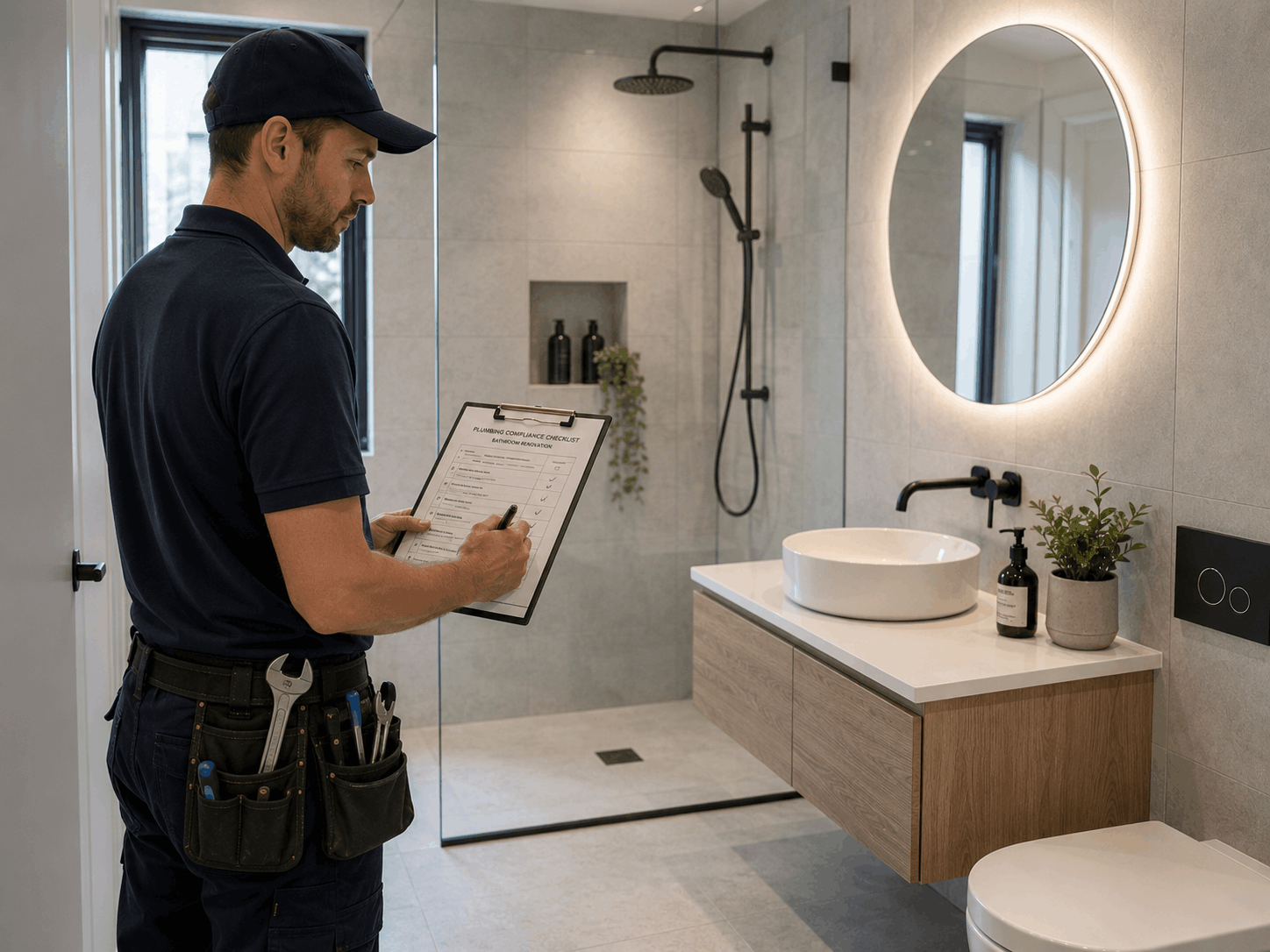
When you hire Civic Plumbing for a project requiring certification, the process is transparent and professional:
No. Under plumbing regulations in Australia, only a duly licensed plumber can issue a compliance certificate. DIY plumbing on anything beyond basic maintenance is illegal in Australia and will not be eligible for certification.
The cost is usually a small administrative fee included in your plumber’s quote. The real value lies in the quality of the work and the plumbing compliance inspection required to verify it meets Australian Standards.
If a compliance certificate is required for the work performed, such as a burst pipe repair or a new gas line installation, and your plumber refuses to provide one, contact your state regulator such as NSW Fair Trading. Issuing a certificate is a legal obligation, not an optional extra.
If the toilet repairs involve moving the pan or replacing the internal waste pipes, yes. If it is a simple fix, such as replacing a flush valve, a certificate is generally not required, though the work must still be performed to standard.
The certificate serves as a permanent record that the work was compliant at the time of installation. It also typically triggers a “statutory warranty” period (usually 6 years in many Australian states), during which the plumber is responsible for fixing any defects in their workmanship.
A plumbing compliance certificate is the difference between work that looks finished and work that is genuinely safe, legal, and covered. It is your legal protection against faulty workmanship, your insurance against future claims, and your proof of quality for future buyers. When you invest in your property, never settle for a plumber who cuts corners on paperwork.
At Civic Plumbing, we take plumbing regulations in Australia seriously. Every project requiring certification that we undertake, from gas fitting services to complex pipe relining, is backed by a valid compliance certificate, issued by our fully licensed team. We pride ourselves on transparency, safety, and delivering 5-star results for every Sydney home and business.
Don’t leave your property’s compliance to chance. Whether you are planning a renovation or need an urgent water heater repair, ensure you are working with the best.
Need a licensed expert? Call us today on 0410 790 630 to book your compliant plumbing service.



