- We're are currently open!
 5 - Star Service
- Call our number today!
0410 790 630
5 - Star Service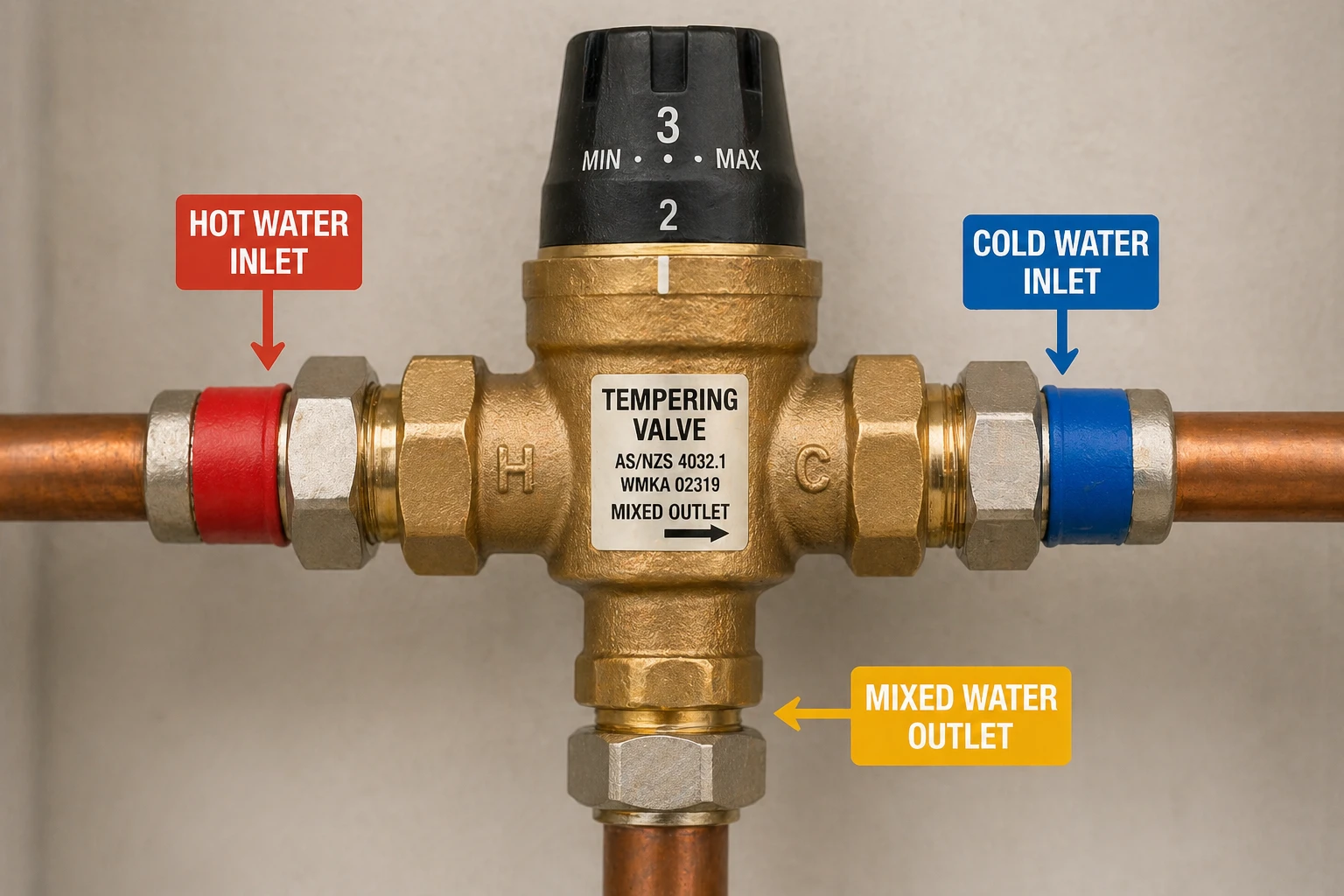
When you turn on your shower or kitchen tap, you likely take for granted that the water will be at a comfortable, safe temperature. However, behind the scenes of your plumbing system, a small but vital component is working tirelessly to prevent life-changing injuries. If you have ever wondered what is a tempering valve?, you are asking one of the most important questions regarding home safety and Australian plumbing compliance.
In Sydney, where heritage homes meet modern apartment living, the way we manage hot water has evolved. This guide serves as a comprehensive educational resource for homeowners, landlords, and property managers to understand the mechanics, legalities, and maintenance requirements of the hot water tempering valve.
To answer the core question of what is a tempering valve, we first need to look at its primary function: temperature control. A tempering valve is a 3-way mixing valve that blends hot water from your water heater with cold water from the mains. This process ensures that the water delivered to your taps, specifically in “personal hygiene areas” like bathrooms, is at a constant, safe temperature.
In Australia, the Plumbing Code (AS/NZS 3500.4) dictates that water stored in a tank must be kept at a minimum of 60°C. This high temperature is essential to prevent the growth of Legionella bacteria, which can cause severe respiratory illnesses. However, water at 60°C can cause a third-degree burn in less than a second. The hot water tempering valve bridges the gap between what the tank needs for health reasons and what is safe for the person using it, cooling the water to a maximum of 50°C before it reaches your skin.
The tempering valve system works using a thermal element, usually a wax capsule inside the valve body.
1. The Intake: Hot water from the heater enters one side of the valve, while cold water enters the other.
2. The Mix: As the hot water passes over the thermal element, the wax expands or contracts, physically moving a slider that adjusts the ratio of hot to cold water.
3. The Output: This automatic adjustment happens in milliseconds. Even if someone elsewhere in the house flushes a toilet or starts the washing machine (causing a drop in cold water pressure), the valve reacts to maintain the pre-set temperature, typically 50°C for residential homes.
This high level of responsiveness is why a professional mixing valve plumbing installation is superior to simply “turning down the thermostat” on your heater, a practice that is both dangerous for bacterial growth and illegal in most Australian jurisdictions.
Sydney’s diverse housing stock, from Redfern terraces to Mosman mansions, all falls under the same national regulations. If you are undergoing a water heater repair or installing a new system, a tempering valve is likely a legal requirement.
Scalding is a major cause of domestic injury in Australia. Children and the elderly are particularly vulnerable because their skin is thinner and their reaction times may be slower. By ensuring that your tempering valve system is functioning, you create a fail-safe environment in the bathroom.
In New South Wales, it is mandatory to have a tempering valve installed whenever a hot water system is replaced or a new home is built. If a household injury occurs and it is discovered that your system lacked a compliant mixing valve plumbing setup, your home insurance may be voided, and you could face significant legal liability.
While the primary focus is safety, a well-maintained valve ensures you aren’t wasting energy by overheating water that you then have to manually cool down at the tap. It also means a more consistent water temperature throughout the home.
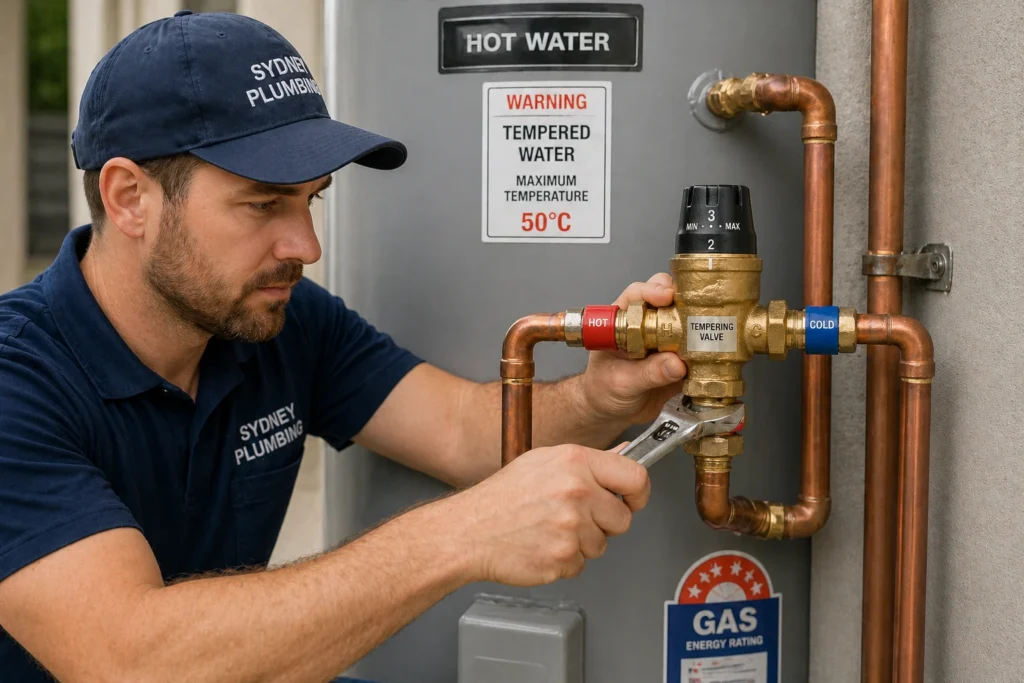
Like any mechanical component, a tempering valve has a limited lifespan, generally between 5 and 7 years. Because the internal parts are constantly exposed to varying temperatures and mineral deposits in Sydney’s water, they can eventually fail.
If your water temperature has become unpredictable, it may be time for a valve inspection. Look out for these warning signs:
• Water is Lukewarm: If your shower never gets hot despite the heater being on, the valve may be stuck in the “cold” position.
• Water is Scorchingly Hot: This is a dangerous failure where the valve allows 60°C+ water straight to the tap.
• Reduced Water Pressure: Mineral buildup (calcium) inside the valve can restrict flow, leading to a frustratingly weak shower.
• Fluctuating Temperatures: If the water goes from hot to cold without warning, the thermal element is likely failing.
In these instances, a water heater repair specialist should be called to test the valve and determine if a replacement is necessary.
Many homeowners and even tradespeople confuse a tempering valve with a Thermostatic Mixing Valve (TMV).
• Tempering Valves: These are standard for residential homes. They are accurate to within +/- 3°C and are cost-effective to replace.
• TMVs: These are required in “high-risk” environments like hospitals, aged care facilities, and childcare centres. They are more expensive, much more accurate, and require mandatory six-monthly testing.
For the average Sydney homeowner, a standard hot water tempering valve is the correct and compliant choice.
Yes, it is mandatory under AS/NZS 3500.4. When you install a new hot water system or perform a major water heater repair involving a tank replacement, a licensed plumber must install a hot water tempering valve to limit bathroom water to 50°C.
While some valves have an adjustment screw, it is highly discouraged for homeowners to do this. An incorrectly set valve can lead to severe burns. A professional trained in mixing valve plumbing uses a thermometer to calibrate the valve precisely to 50°C.
Most manufacturers recommend replacing the valve every 5 to 7 years. In Sydney areas with “harder” water, mineral deposits can cause the valve to seize earlier, necessitating a water heater repair call-out.
This is a common “fail-safe” mode. If the hot water tempering valve detects a failure in its internal thermal element, it may block the hot water entirely to prevent a potential scald, leaving you with only cold or lukewarm water.
Usually, no. Regulations allow water in kitchens and laundries to be hotter (up to 60°C) for better grease removal and sanitation. A tempering valve system is typically installed specifically for the lines running to bathrooms.
Knowing what a tempering valve is and how it works is the first step toward a safer home. This small device carries the massive responsibility of protecting your family from invisible dangers, ensuring that the luxury of hot water never becomes a hazard. From legal compliance to daily comfort, the hot water tempering valve is an unsung hero of the modern Sydney bathroom.
At Civic Plumbing, we are committed to the highest standards of mixing valve plumbing and safety. Whether you are experiencing fluctuating temperatures or are due for a routine water heater repair check, our licensed team is here to ensure your system is compliant and efficient. We provide upfront pricing and expert service across all Sydney suburbs.
Don’t risk a scald or a non-compliant system. If your hot water feels “off” or you haven’t had your valve checked in years, it’s time for a professional audit.
Contact Civic Plumbing today on 0410 790 630 for expert hot water advice and reliable repairs.
